載入中 |
載入中
載入錯誤
還在載入中,請稍候...


Tetsuhiko的筆記
Ch2 分析和記錄交易
- 2017-10-31 09:44:22
- 642
- 會計學
-


- 分析及記錄程序 (Analyzing And Recording Process)
- The accounting process
identifies business transactions and events,
analyzes and
records their effects, and
summarizes and
presents information in reports and financial statements.
會計程序係指將企業的交易及經濟活動加以辨認、分析、記錄,彙整呈現資訊於財務報表。
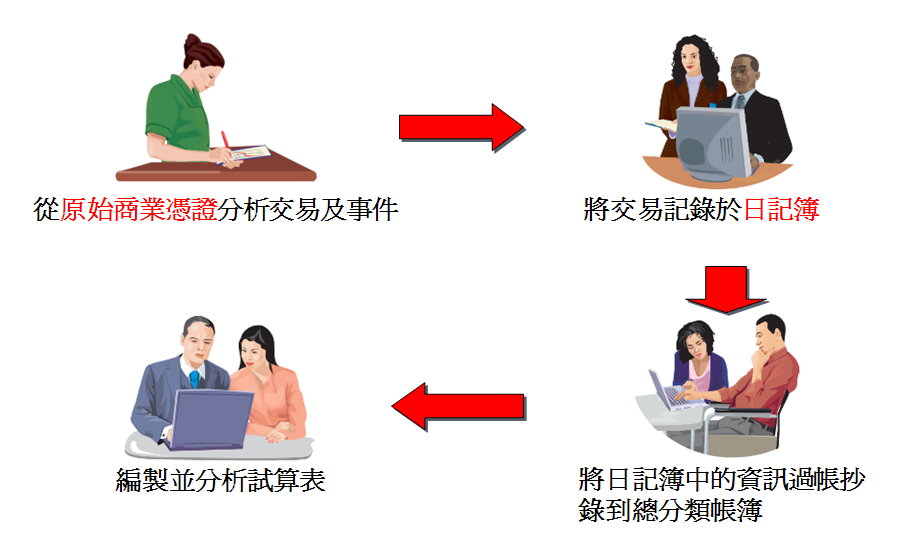
- Business transactions and events are the
starting points.
會計程序始於企業的交易及事件。 - Relying on source documents, the transactions and events are
analyzed using the accounting equation to understand how they affect
company performance and financial position.
根據原始商業憑證,利用會計恆等式分析交易以了解其對公司績效及財務狀況的影響 。 - Additional steps such as posting and then preparing a trial balance help summarize and classify the effects of transactions and events.
過帳及編製試算表可協助彙整和分辨交易事件的影響。 - The accounting process provides information in useful reports or
financial statements to decision makers.
會計程序提供有用的報告和財務報表給決策者。
- The accounting process
identifies business transactions and events,
analyzes and
records their effects, and
summarizes and
presents information in reports and financial statements.
- 文件來源 (Source Documents)
- 會計程序始於辨認及描述企業的交易及事件。
- 會計之原始商業憑證可以是紙本或電子型式。
- 外部憑證在交易事件及金額上,可提供客觀和可靠的證據。
- 帳戶及其分析 (The Account And Its Analysis)
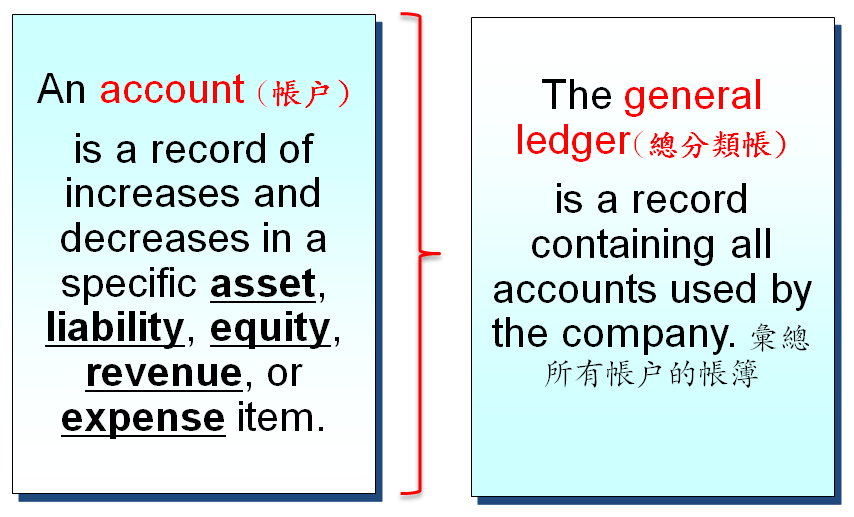
- 資產帳戶 (Assets Accounts): 企業所擁有且能控制的資源,具有未來經濟效益。
(Resources owned or controlled by a company and that have
expected future benefits.)
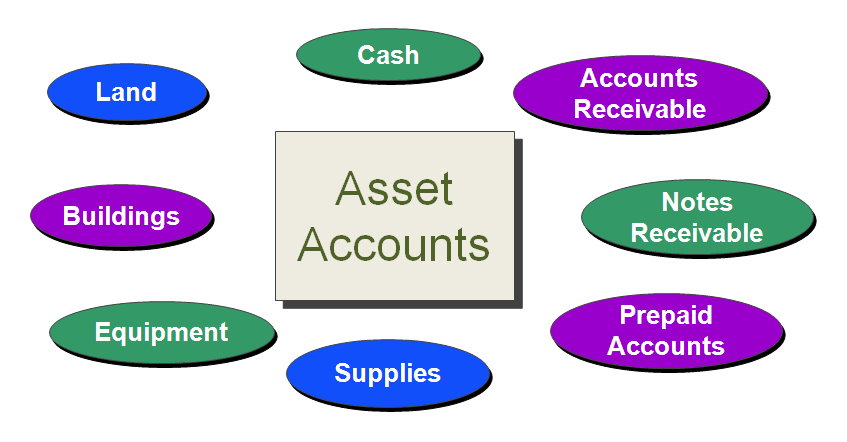
- Cash account reflects a company's cash balance.
現金帳戶代表企業現金的餘額。 - Accounts receivable are
held by a seller and refer to promises of payment from customers to
sellers. These transactions are often called credit sales
or sales on account (or on credit).
應收帳款指因賣方銷售行為而產生對顧客收取款項的權利,一般稱之為賒銷。 - Note receivable (or promissory note) is a written promise of
another entity to pay a definite sum of money on a specified future date
to the holder of the note.
應收票據指持票人有權於未來特定日期向債務人收取票據中金額的書面承諾。 - Prepaid accounts (also called
prepayments or prepaid
expenses) are assets that represent prepayments of future expenses (not
current expenses).
預付款項是資產,預先支付現金但尚未享受到的權利。常見的例子:
- Prepaid insurance (預付保險)
- Prepaid rent (預付租金)
- Prepaid services (such as club memberships) (預付服務 (例如:俱樂部會員))
Premium: insurance fee, is paid in advance, the cost is typically recorded in the asset account Prepaid Insurance.
保險:預先支付現金,記錄為資產科目預付保險。
- 隨時間經過,耗用掉的權利,應調減相關資產科目。
- 耗用掉的承認為費用並列於損益表中。
- 未用完的預付保險記錄在財務狀況表的資產項下。
- Supplies
are assets until they are used. When they are used up, their costs are
reported as expenses.
用品是資產,耗用掉的用品報導為費用。例如:
- Office supplies (辦公用品)
- Store supplies (倉儲用品)
- Equipment
is an asset. When equipment is used and gets worn down, its cost is
gradually reported as an expense (called depreciation).
設備是資產,使用的過程會損壞老舊,耗用掉的部分報導為費用(即折舊)。- Office equipment (辦公設備):Computers, printers, desks, chairs, and shelves.
- Store Equipment account (倉儲設備):The costs of assets used in a store, such as counters, showcases, ladders, hoists, and cash registers.
- Buildings
are assets because they provide expected future benefits to those who
control or own them. Such as stores, offices, warehouses, and factories.
建築物是資產,因為它能提供未來經濟效益,且為企業所擁有、控制。例如:店面、辦公室、倉庫、工廠。 - The cost of land owned by a business is recorded in a land account.
企業所擁有的土地成本稱為土地。
- Cash account reflects a company's cash balance.
- 負債帳戶 (Liabilities Account): 負債是債權人對資產的請求權,企業有提供資產、產品或服務來償還的責任。
(Liabilities are claims (by creditors) against assets, which means they
are obligations to transfer assets or provide products or
services to others.)
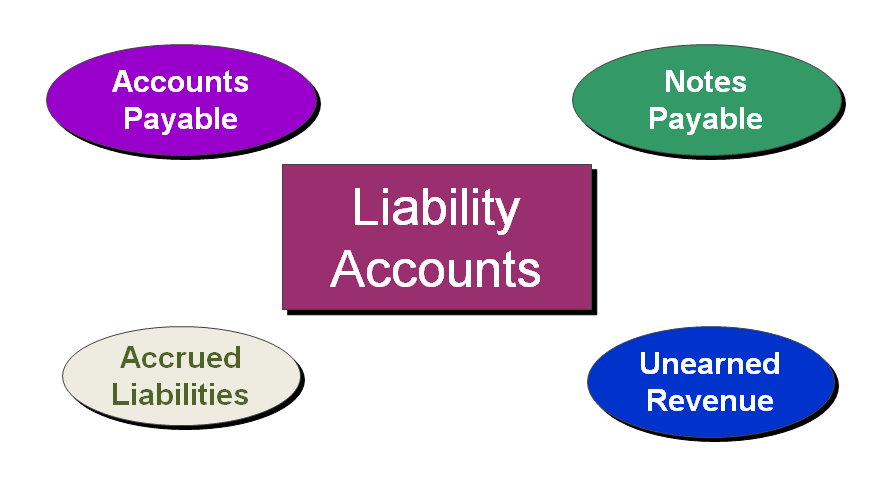
-
Accounts
payable refers to oral or implied promises to pay later,
which usually arise from purchases of merchandise.
應付帳款係由於進貨而產生未來有支付的義務,通常僅是口頭承諾。 - Note
payable refers to a formal promise, usually denoted by the
signing of a promissory note, to pay a future amount.
應付票據是較正式,藉由簽發票據承諾未來支付的義務。-
It is recorded in either a short-term Note Payable account
or a long-term Note Payable account, depending on when it
must be repaid.
可以是短期應付票據也可以是長期應付票據,視償還期間而定。
-
It is recorded in either a short-term Note Payable account
or a long-term Note Payable account, depending on when it
must be repaid.
-
Unearned revenue: a liability that is settled
in the future when a
company delivers its products.
預收收入是負債,在未來提供商品時,負債才會結束。-
The seller would record these in liability accounts.
賣方記錄為負債帳戶。
例如:預收訂閱收入 (Unearned subscriptions)、預收銷貨收入 (Unearned store sales)、預收門票收入 (Unearned ticket revenue)。 -
Products and services are later delivered, the earned portion of
the unearned revenue is transferred to revenue accounts.
未來提供產品或服務時,已賺得的部分轉列為收入帳戶。
例如:訂閱收入 (Subscription fees)、銷貨收入 (Store sales)、門票收入 (Ticket sales) 或 服務收入 (Services)。
-
The seller would record these in liability accounts.
-
Accrued liabilities are amounts owed that are not yet
paid.
應計負債是已發生但尚未付現的費用。
例如:應付薪資 (Wages payable)、應付稅款 (Taxes payable)、應付利息 (Interest payable)。
-
Accounts
payable refers to oral or implied promises to pay later,
which usually arise from purchases of merchandise.
- 權益帳戶 (Equity Account)
- The owner's claim on a company's assets is called
equity or owner's equity.
業主對資產的請求權稱為權益或業主權益。 - Equity is the owner's residual interest in the assets of
a business after deducting liabilities.
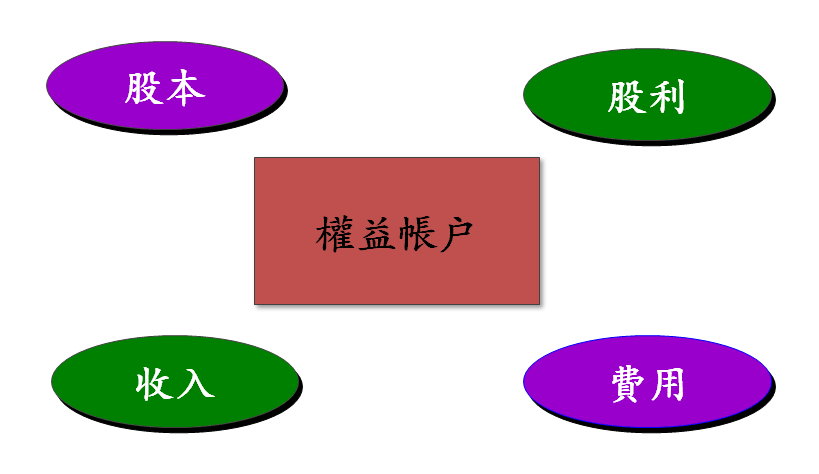
權益是資產扣除負債後的剩餘權益。 - Equity is impacted by four types of accounts:
權益受四種帳戶影響:- Share capital (股本)
- Dividends (股利)
- Revenues (收入)
- Expenses (費用)
-
Share Capital: When an investor receives shares
for investing in a company.
股本:股東對企業所做投入時所收到之股票。 - Dividends: When the company distributes
dividends, it decreases both company assets and total equity.
The Dividends account is used to record distributions to the
shareholders.
股利:公司分配現金股利時,資產及權益均下降。股利代表對股東們的分配。 - Revenues: Increase equity and result from
products and services provided to customers.
收入:提供產品或服務即為收入,會使權益增加。 - Expenses: Decrease equity and result from
assets and services used in a company's operations.
費用:資產或服務的耗用即為費用,會使權益下降。
- The owner's claim on a company's assets is called
equity or owner's equity.
- 資產帳戶 (Assets Accounts): 企業所擁有且能控制的資源,具有未來經濟效益。
(Resources owned or controlled by a company and that have
expected future benefits.)
- 總分類帳及會計科目表 (Ledger And Chart of Accounts)
- 總分類帳簿
Ledger (General ledger)
- The collection of all accounts and their
balances for an information system.
將所有帳戶及其餘額彙總在一本帳簿中 。 - A company's size and diversity of operations affect the
number of accounts needed.
公司規模及多樣化程度會影響會計科目數量的需求。
- The collection of all accounts and their
balances for an information system.
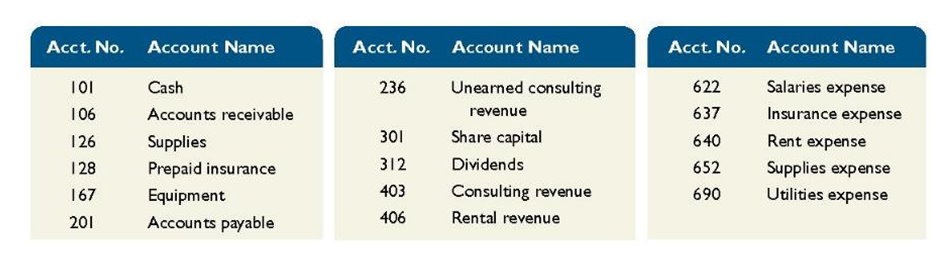
- Exhibit 2.4
Partial Chart of Accounts for FastForward
部分會計科目表
- 總分類帳簿
Ledger (General ledger)
- 借方及貸方 (Debits And Credits)
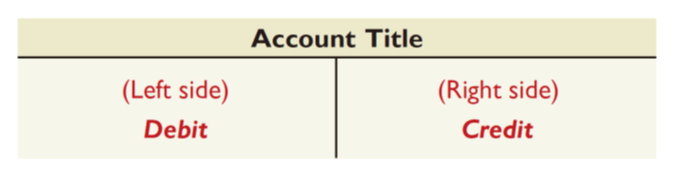
A T-account represents a ledger account and is a tool used to understand the effects of one or more transactions.
一個T帳戶代表總帳裡一個會計帳戶,從T帳戶可看出交易對帳戶的影響。
- Exhibit 2.5
The T-Account
- Account balance
- The difference between total debits and total credits for an account, including any beginning balance.
- Debit balance
- When the sum of debits exceeds the sum of credits.
- Credit balance
- When the sum of credits exceeds the sum of debits.
- Zero balance
- When the sum of debits equals the sum of credits.
- Exhibit 2.5
- 複式簿記 (Double-Entry Accounting)
-
複式簿記制度 (Double-entry accounting)
- 每項交易至少會影響兩個以上之帳戶,至少一個借方一個貸方。
- 交易的借方總金額必須等於貸方總金額。
- 符合會計恆等式之平衡。
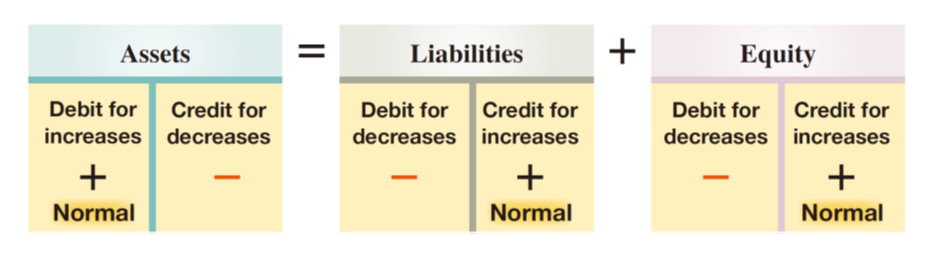
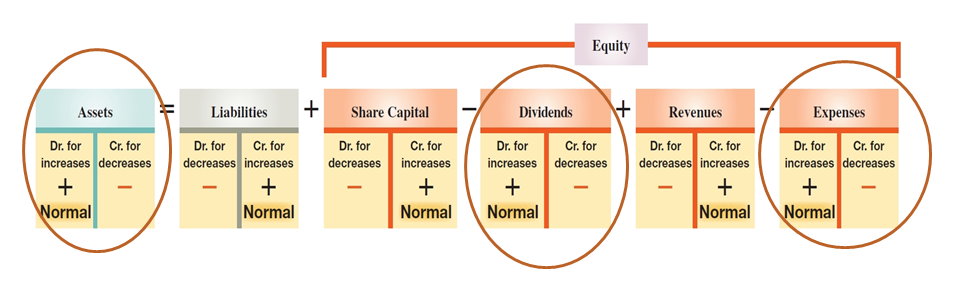
- Assets
- The left side is the normal balance side.
- Liabilities / Equity
- The right side is the normal balance side.
Equity increases from revenues and issuance of shares and it decreases from expenses and dividends.
發生收入及發行股票使權益增加;發生費用及發放股利使權益減少。- Exhibit 2.6
Debits and Credits in the Accounting Equation
- Exhibit 2.7
Debit and Credit Effects for Component Accounts
-
複式簿記制度 (Double-entry accounting)
- 做分錄及過帳
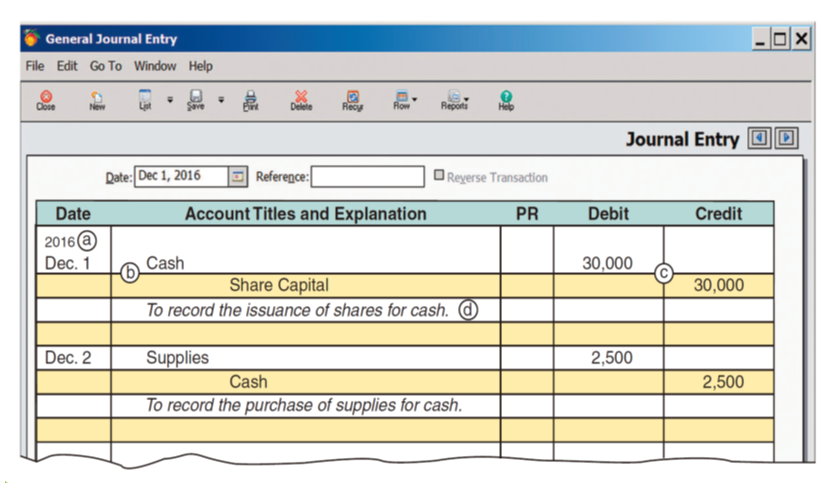
- 日記簿 (General journal)
- 每一筆交易記錄必須包含:
- 交易日期
- 影響的帳戶名稱
- 借貸金額
- 交易的摘要說明
- 每一筆交易記錄必須包含:
- Exhibit 2.10
Partial General Journal for FastForward
- Exhibit 2.11
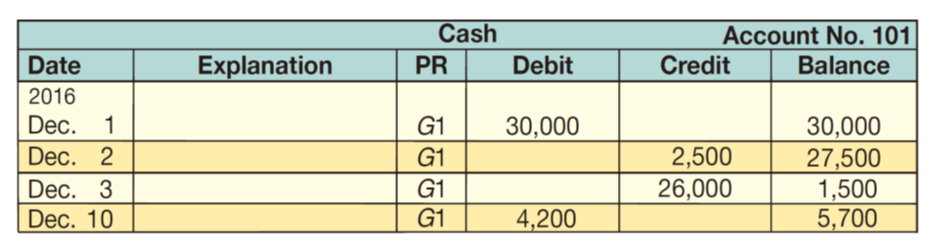
Cash Account in Balance Column Format
現金帳戶直欄式餘額帳戶格式
- Journalizing and Posting Transactions
-
The balance column account format is similar to a
T-account in having columns for debits and credits.
直欄式餘額帳戶格式和T帳戶類似,有借方和貸方。 - An abnormal balance refers to a balance on the
side where decreases are recorded.
非正常餘額指帳戶的餘額出現在減項那一邊。 - 將日記簿中之借方記錄,轉登於分類帳簿之借方。
- 將日記簿中之貸方記錄,轉登於分類帳簿之貸方。
-
The balance column account format is similar to a
T-account in having columns for debits and credits.
- 日記簿 (General journal)
- 試算表 (Trial Balance)
- A list of
accounts and their balances at a point in time.
一張列示所有帳戶及其餘額的彙總表。 - Account balances are reported in their appropriate debit or
credit columns of a trial balance.
每一個帳戶餘額會適當呈現在試算表的借方或貸方。 - A trial balance can be used to confirm this and to follow up on any
abnormal or unusual balances.
試算表可用來驗證是否有非正常或異常餘額。
Preparing a Trial Balance
- Preparing a trial balance involves 3 steps:
Step 1List each account title and its amount (from ledger) in the trial balance.
從總分類帳取得各帳戶名稱及餘額 。
If an account has a zero balance, list it with a zero in its normal balance column (or omit it entirely).
若帳戶餘額為零,可在正常餘額處寫零(或完全省略)。
Step 2Compute the total of debit balances and the total of credit balances.
加總借方及貸方之金額。
Step 3Verify (prove) total debit balances equal total credit balances.
確認借貸總數是否平衡。- If the trial balance does not balance
(when its columns are not equal)
假使試算表不平衡→借方總數不等於貸方總數
Ans: The error (or errors) must be found and corrected. 除錯。
- If an error in a journal entry is discovered before the error is
posted...
假使日記簿的錯誤在過帳前發現…
Ans: It can be corrected in a manual system by drawing a line through the incorrect information. 可用手動操做直接畫記更正。
- If an error in a journal entry is not discovered until after it
is posted...
假使日記簿的錯誤在過帳後才發現…
Ans: We correct this error by creating a correcting entry that removes the amount from the wrong account and records. 必須做更正分錄將錯誤的資訊移除。
- If the trial balance does not balance
(when its columns are not equal)
Using a Trial Balance to Prepare Financial Statements
-
The one-year reporting period is known as the accounting, or
fiscal, or financial year.
報導期間為一年者稱為會計年度。 - Businesses whose accounting year begins on January 1 and ends on
December 31 are known as calendar-year companies.
會計年度為1/1至12/31者稱為曆年制。
- 損益表 (Income
statement)
- Reports the revenues earned less the
expenses
incurred by a business over a period of time.
報導企業個體在某一段特定期間內,收入減費用的彙總情形。
- Reports the revenues earned less the
expenses
incurred by a business over a period of time.
-
權益變動表 (Statement of changes in equity)
- Reports information about
how equity changes over the reporting period.
報導企業個體在某一段特定期間內,權益變動的彙總情形。
- Reports information about
how equity changes over the reporting period.
-
財務狀況表 (Statement of financial position)
- Reports the financial
position of a company at a
point in time, usually at the
end of a
month, quarter, or year.
報導企業個體在某一特定日財務狀況,可以在月底、季末或年底。
- Reports the financial
position of a company at a
point in time, usually at the
end of a
month, quarter, or year.
- A list of
accounts and their balances at a point in time.
- 分析交易 (Analyzing Transactions—An Illustration)
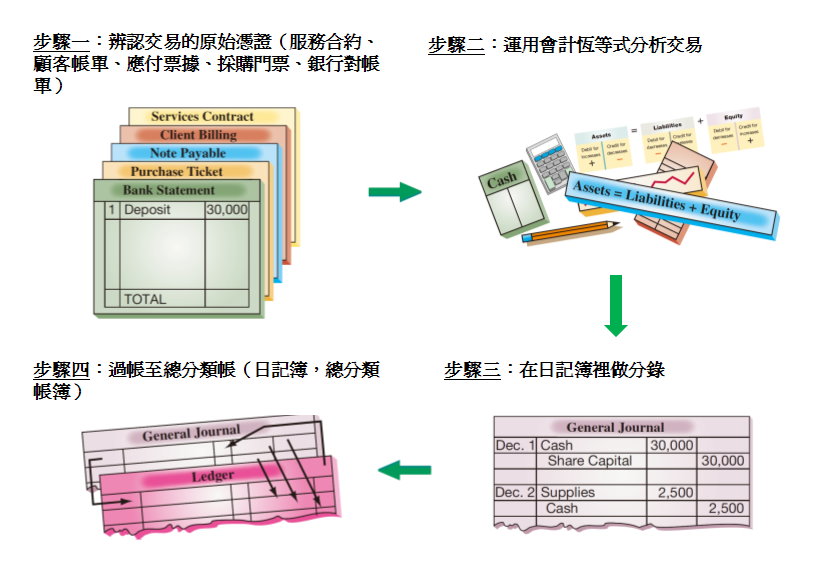
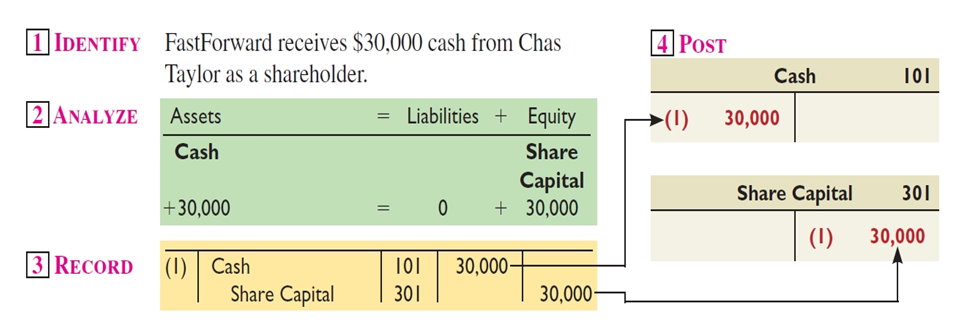
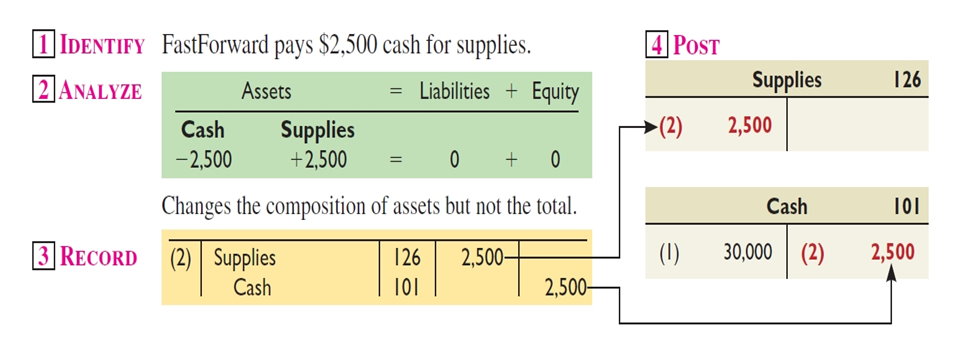
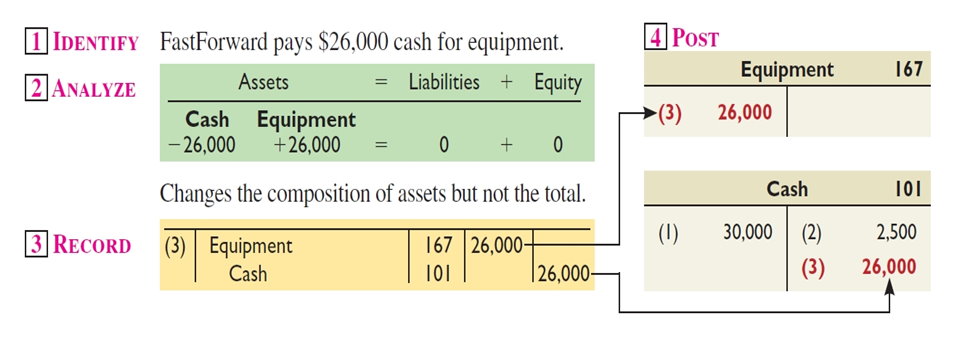
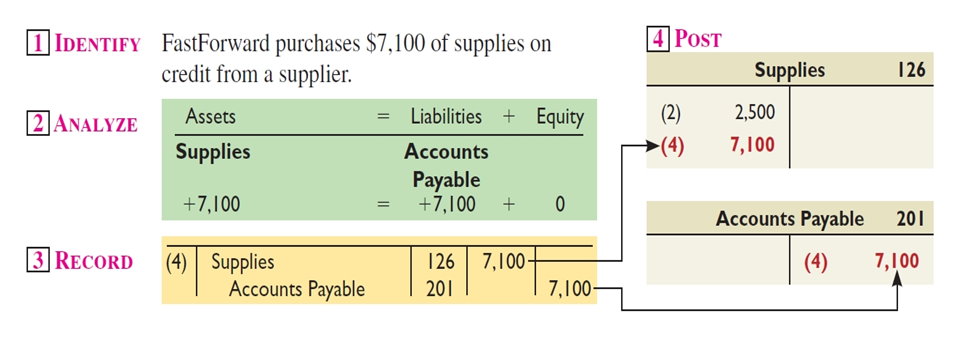
- Analysis of each transaction follows the four steps:
- Step 1 Identify the transaction and any source documents.
- Step 2 Analyze the transaction using the accounting equation.
- Step 3 Record the transaction in journal entry form applying double-entry accounting.
- Step 4 Post the entry (for simplicity, we use T-accounts to represent ledger accounts).
-
Issuance of Shares
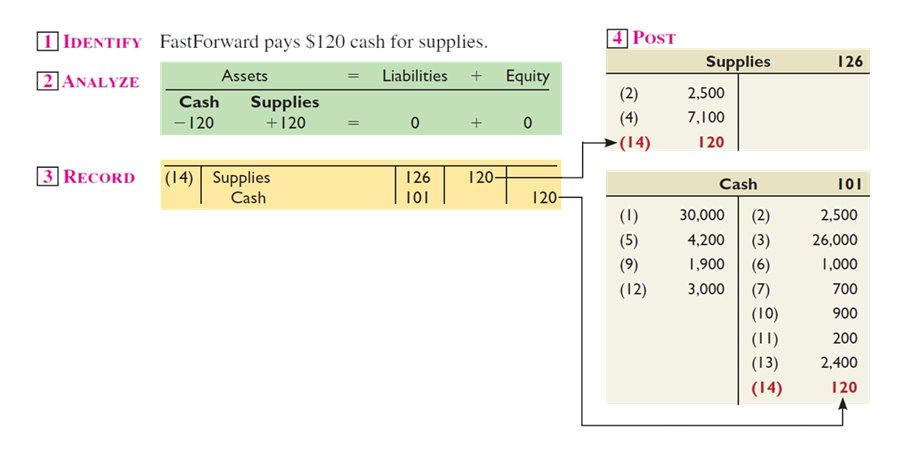
- Purchase of Supplies For Cash
- Purchase of Equipment For Cash
- Purchase of Supplies On Credit (賒帳)
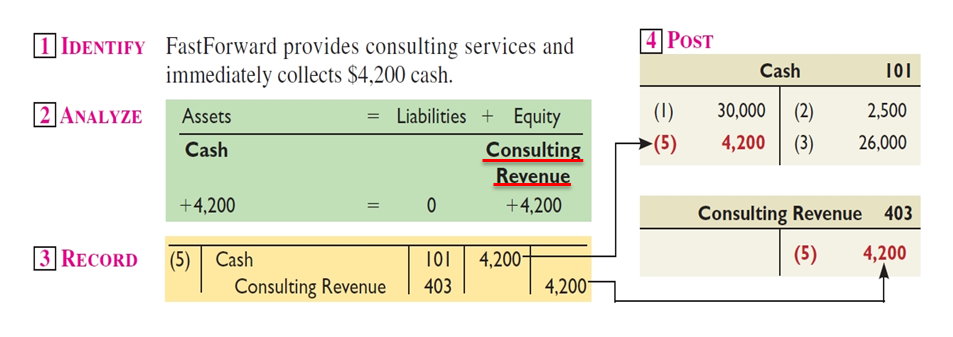
- Provision of Services For Cash
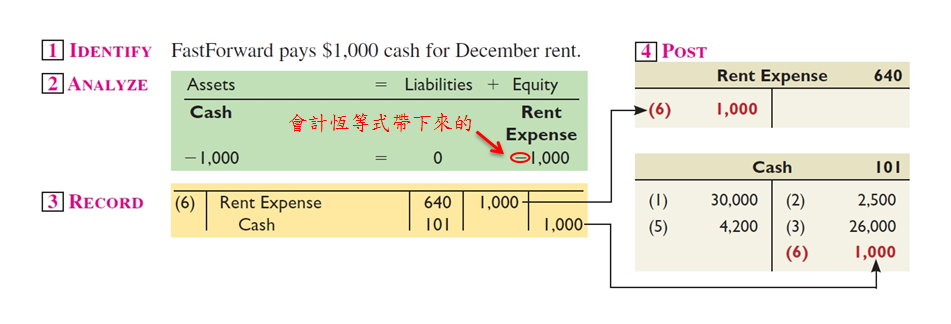
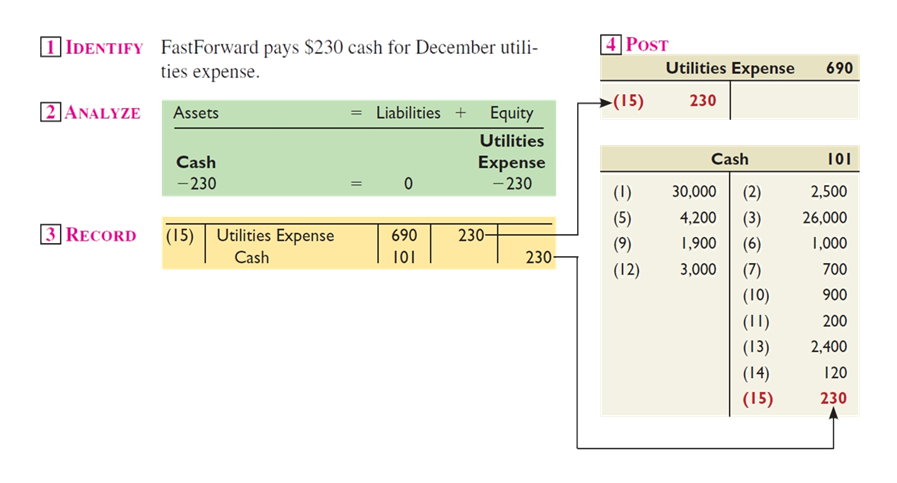
- Payment of Expense In Cash
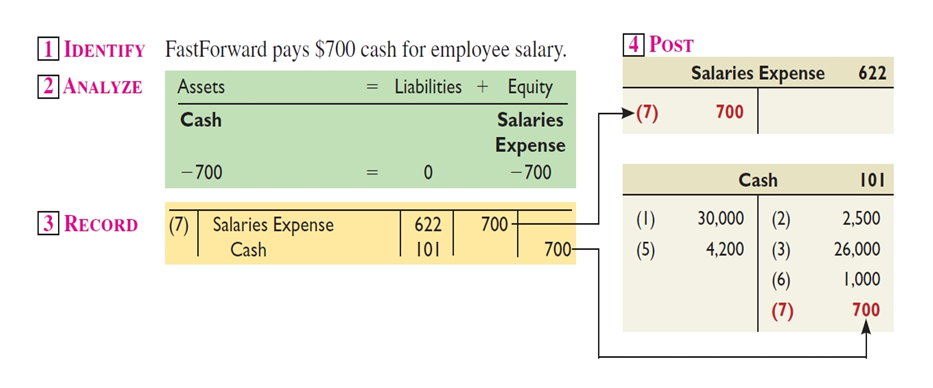
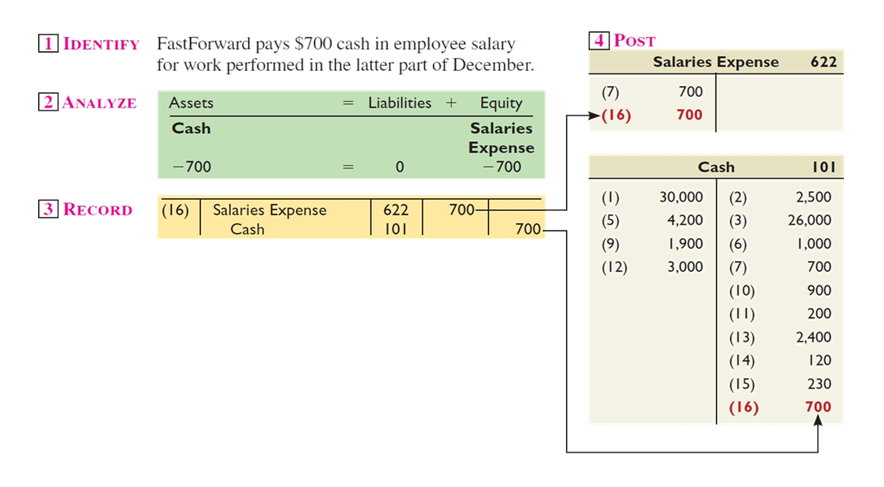
- Payment of Expense In Cash
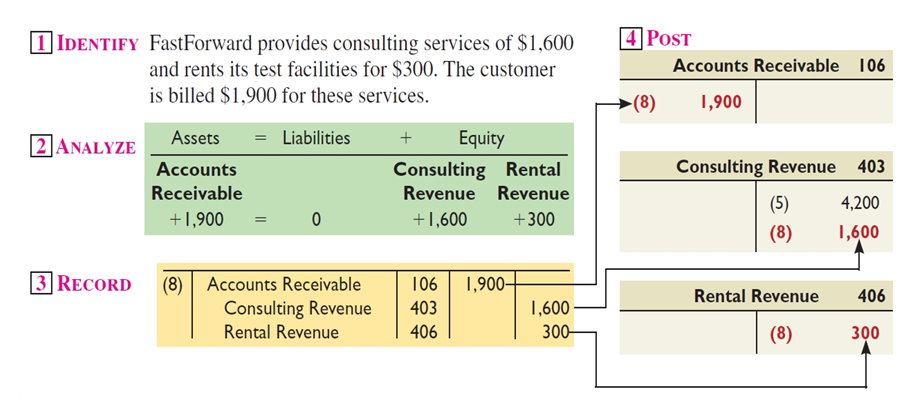
- Provision of Consulting And Rental Services On Credit
- Receipt of Cash On Account
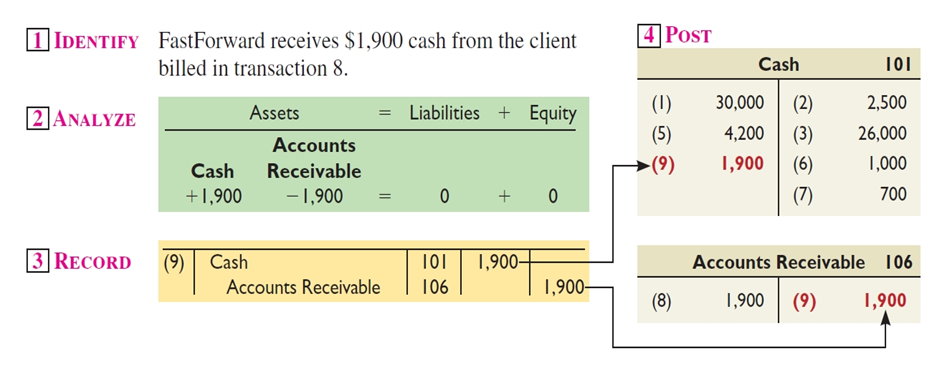
- Partial Payment of Accounts Payable
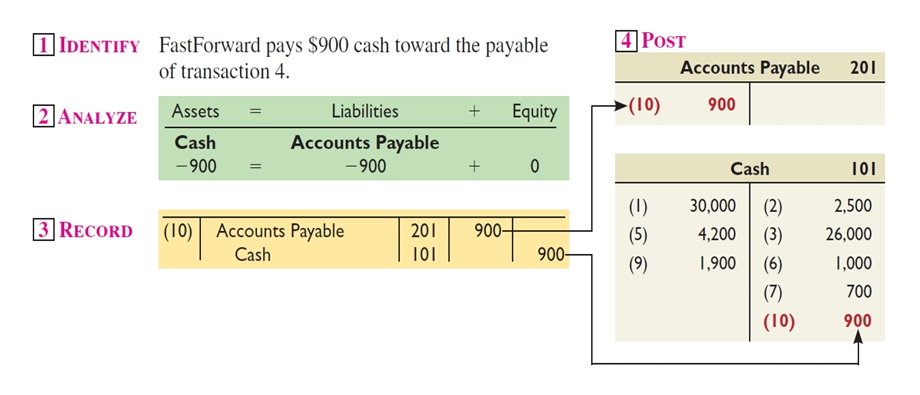
- Payment of Cash Dividends
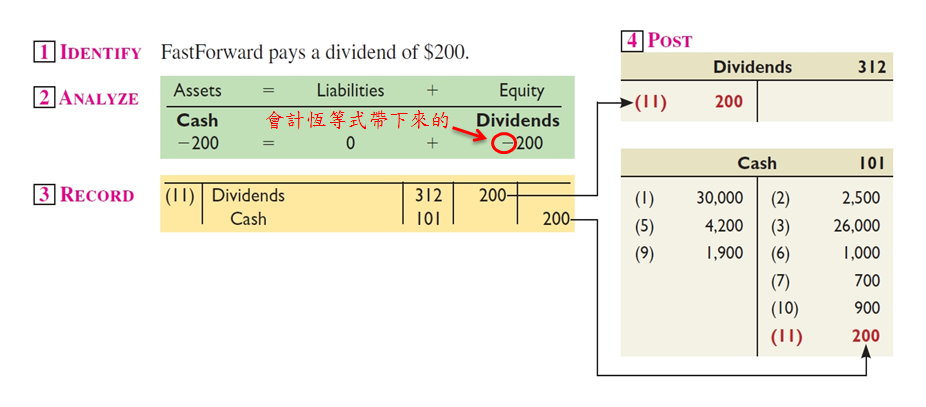
- Receipt of Cash For Future Services
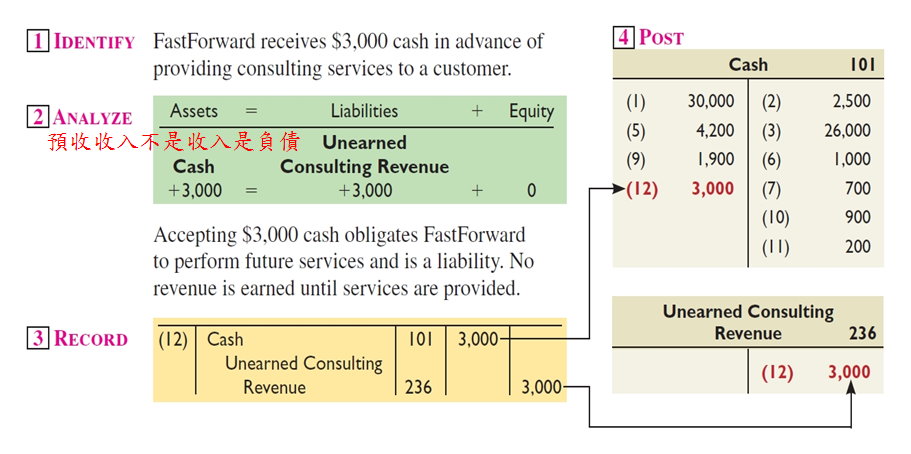
- Payment of Cash For Future Insurance Coverage
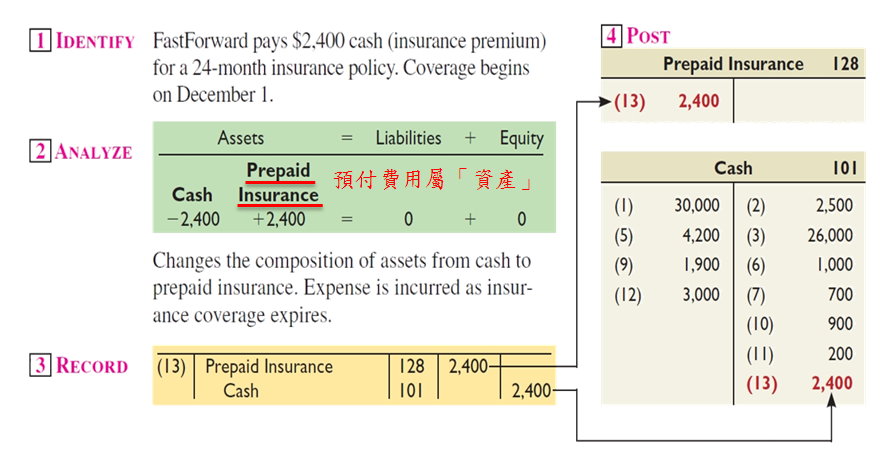
- Purchase of Supplies For Cash
- Payment of Expense In Cash
- Payment of Expense In Cash
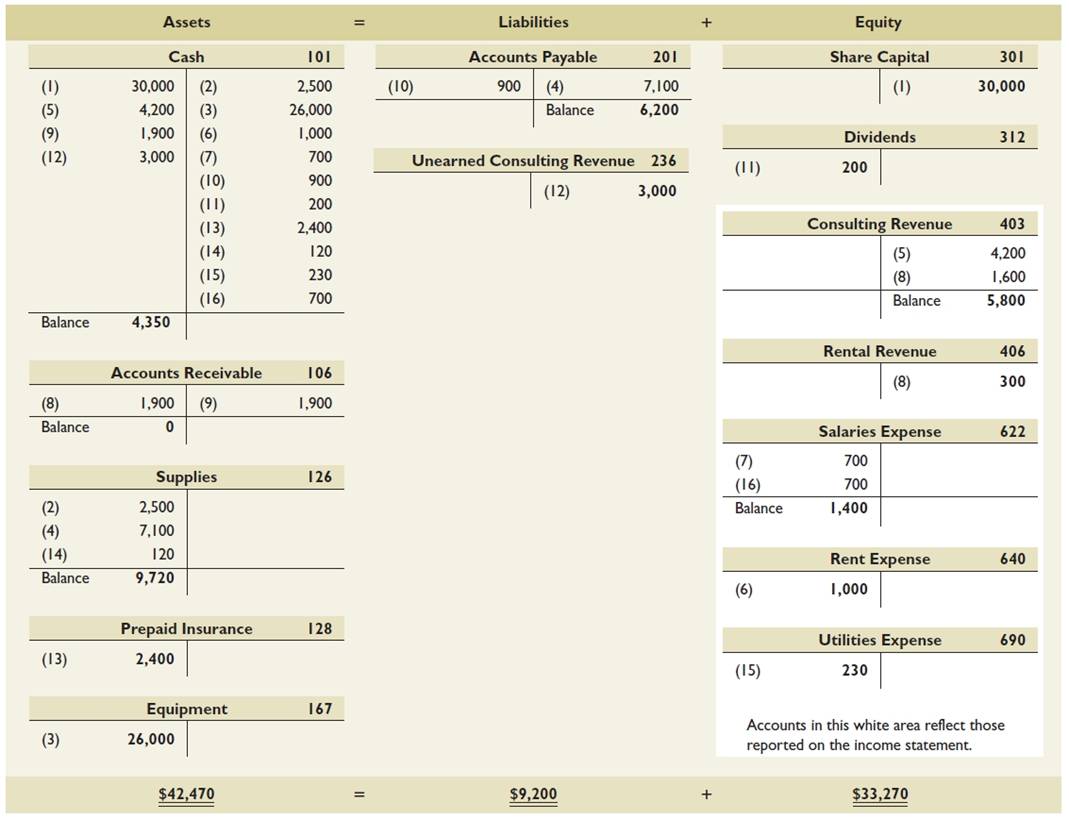
- Exhibit 2.13
Ledger For FastForward (In T-Account Form)
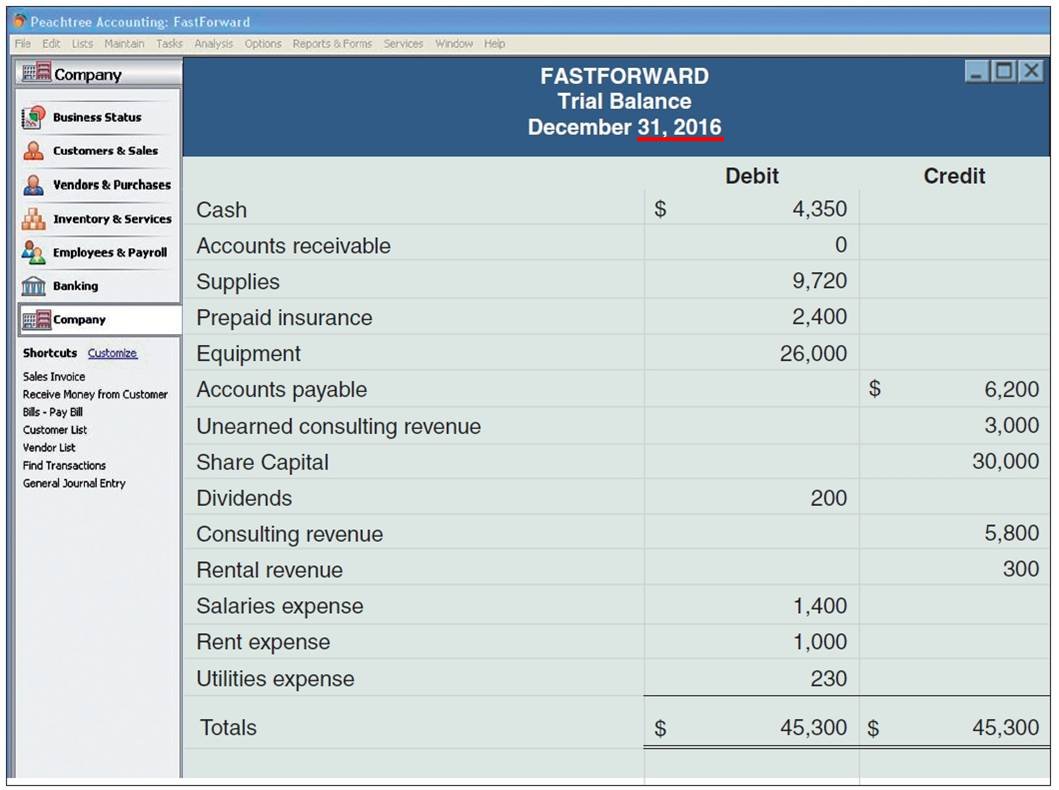
- Exhibit 2.14
Trial Balance (Unadjusted)
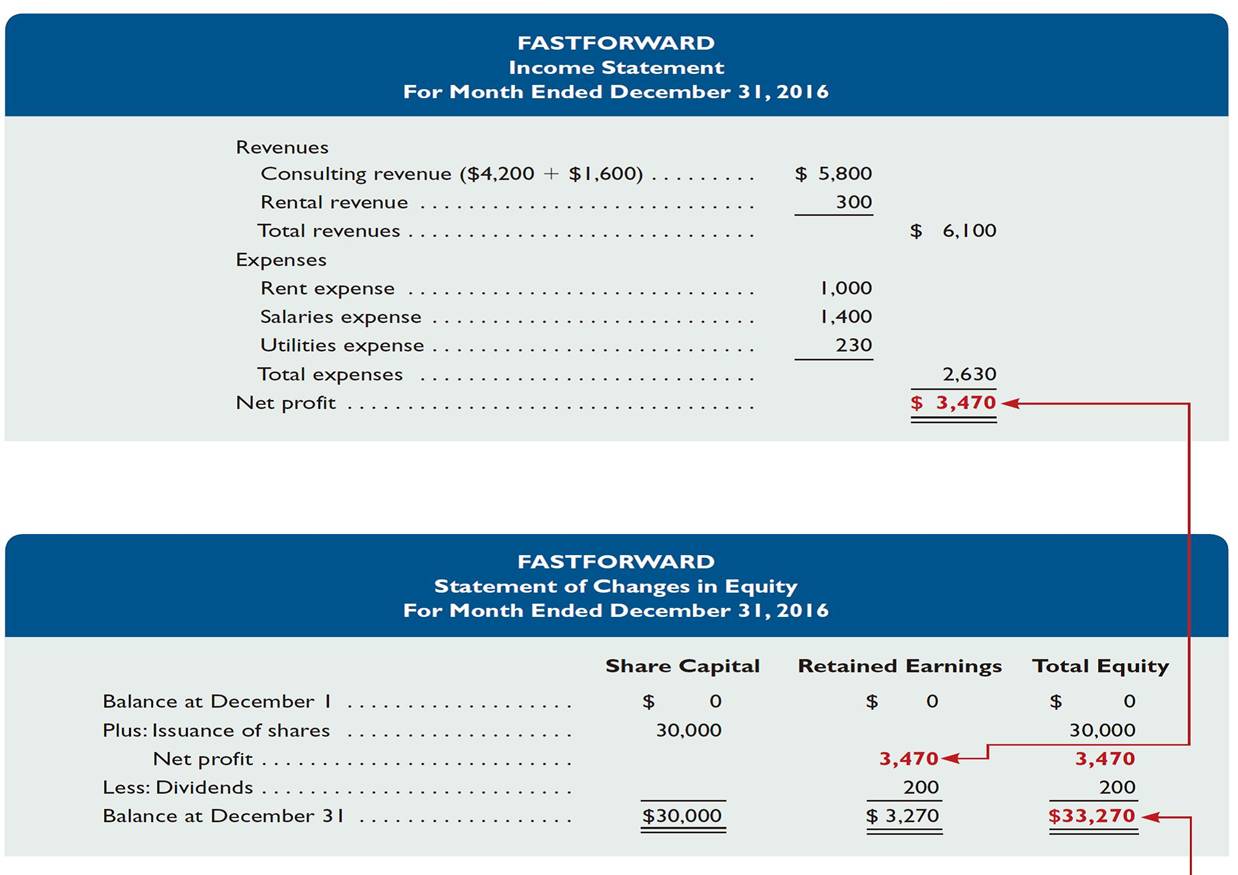
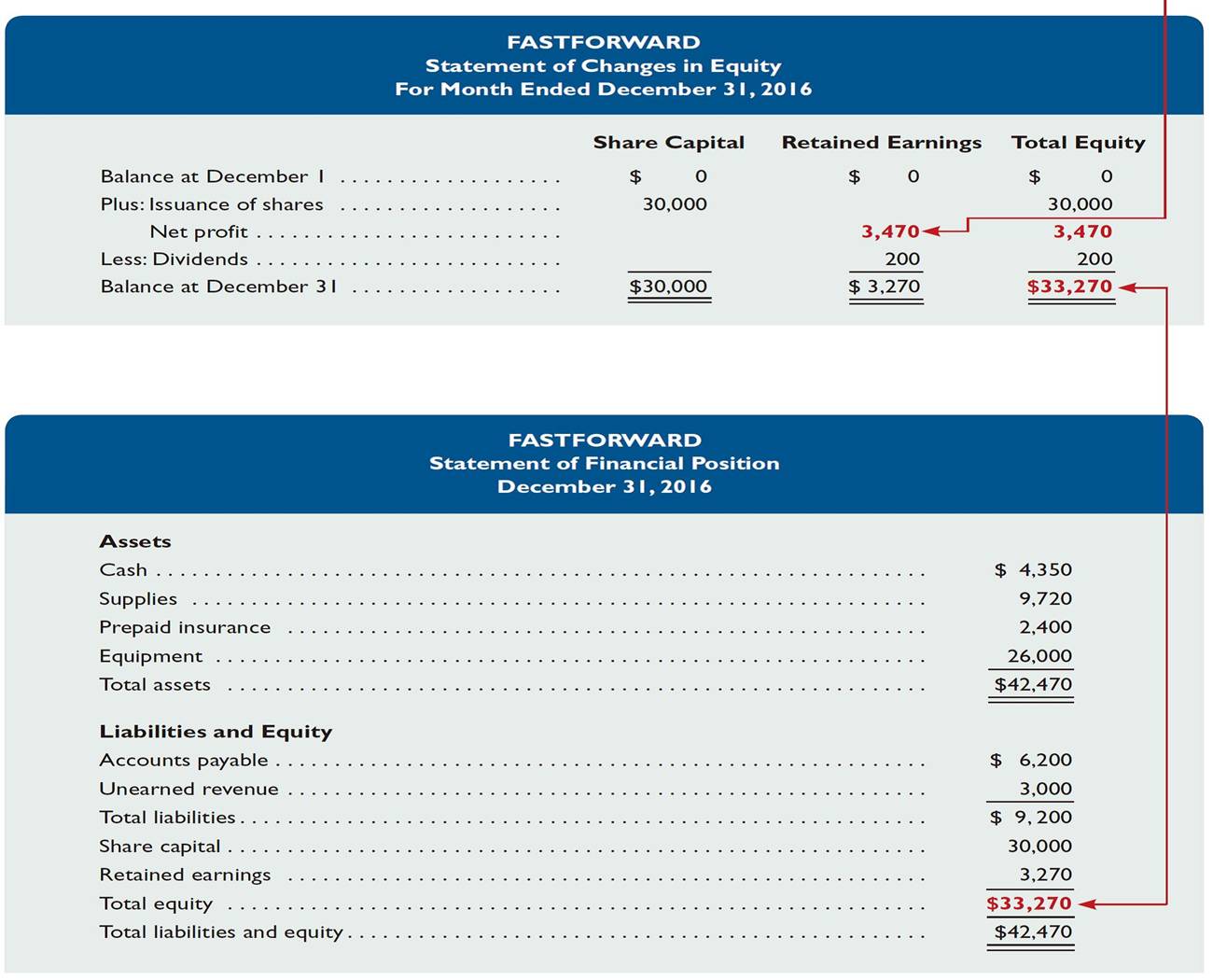
- Exhibit 2.16
Financial Statements And Their Links
- Analysis of each transaction follows the four steps:
圖片/部分文字來源:McGraw-Hill Education.
附加檔案: 2017-Ch2-ppt.ppt
2017-Ch2-ppt.ppt



© 2026 Red Whale
Top