載入中 |
載入中
載入錯誤
還在載入中,請稍候...


Tetsuhiko的筆記
Ch4 完成會計循環
- 2017-11-13 23:43:54
- 2418
- 會計學
-


- 工作底稿
- 工作底稿的優點
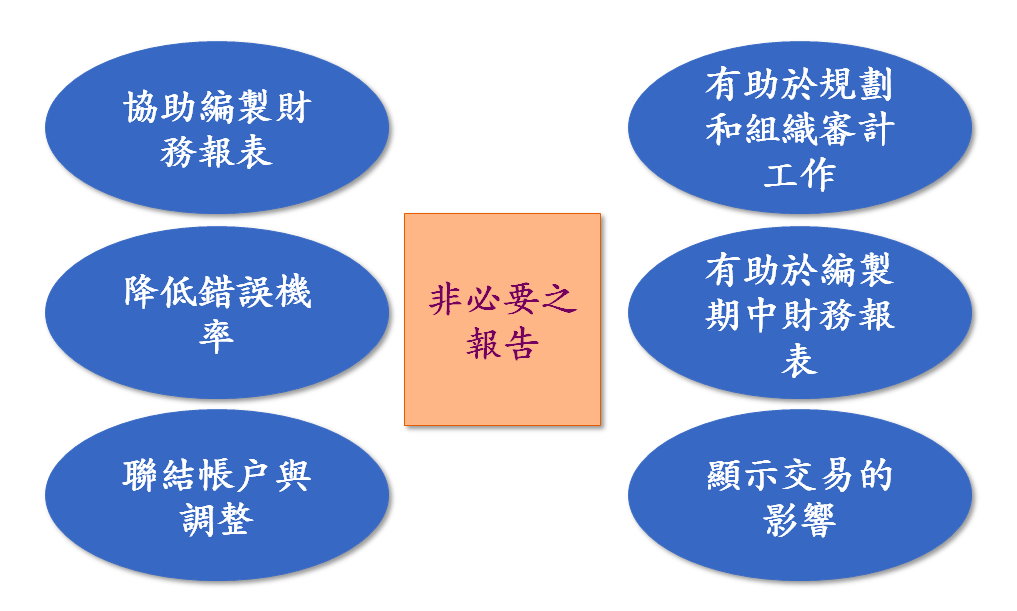
- 工作底稿的運用
- 工作底稿是一張列示所有帳戶、餘額、調整分錄、到編製財務報表的多欄式表格。
- 針對調整前試算表、調整分錄、調整後試算表、損益表及財務狀況表提供兩欄式資訊。
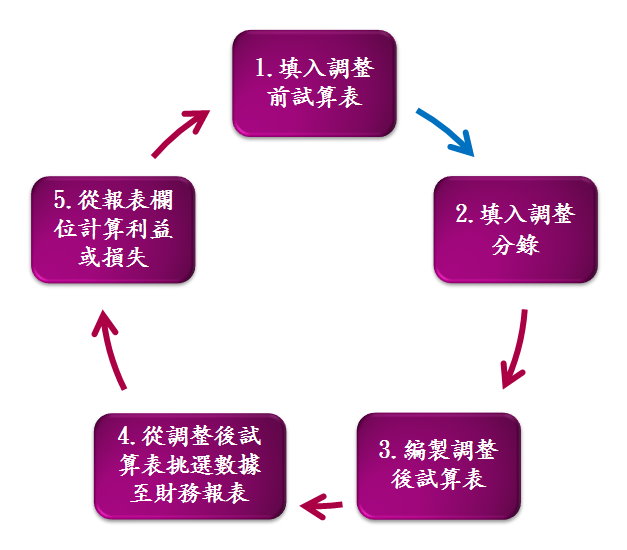
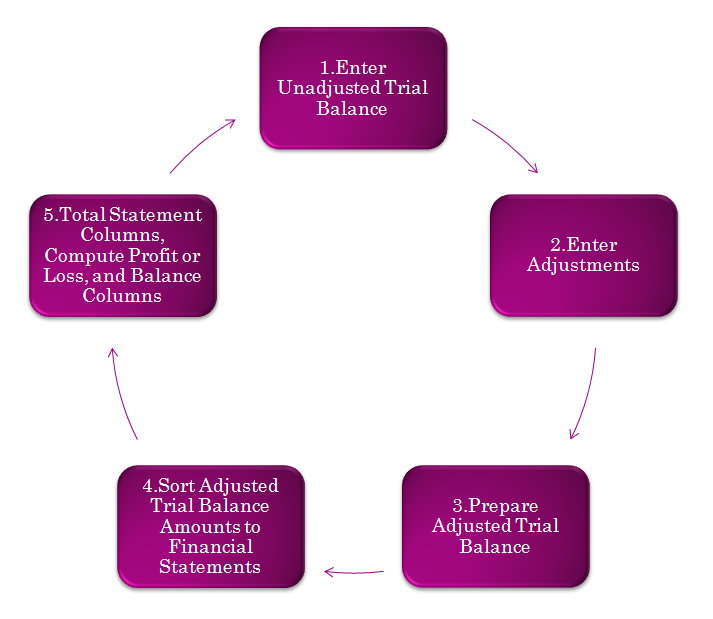
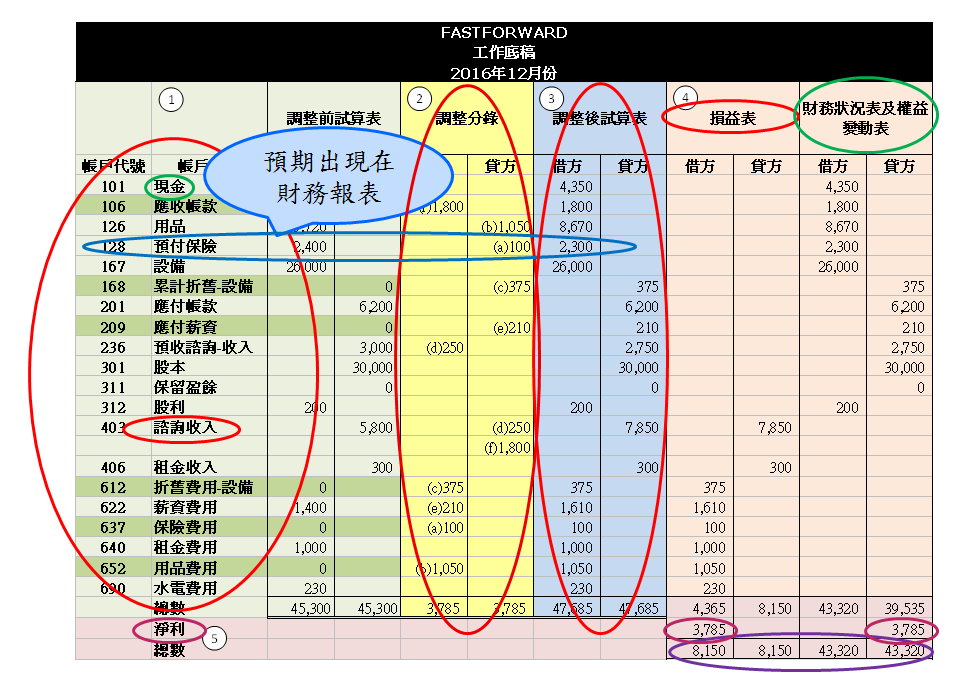
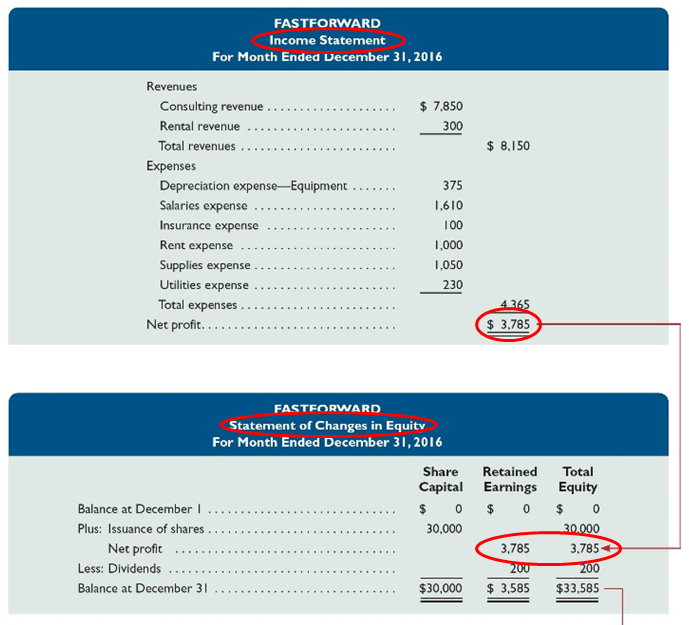
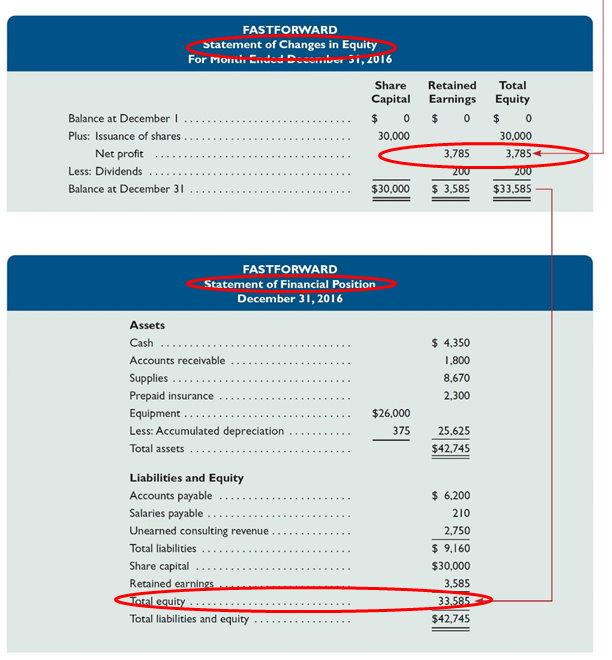
- 工作底稿的優點
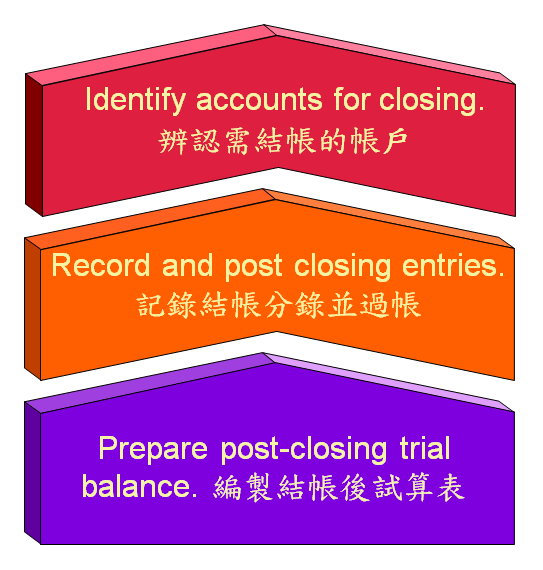
- 結帳分錄 (Closing Process):會計期間結束時,財務報表編製後必須做結帳分錄。
- Resets revenue,
expense and
dividend account balances to zero at the end of the period.
期末時,將收入、費用及股利結清為零。 - Helps summarize a period's revenues and expenses in the
Income Summary account.
彙整此段會計期間的收入及費用至損益彙總。
- Resets revenue,
expense and
dividend account balances to zero at the end of the period.
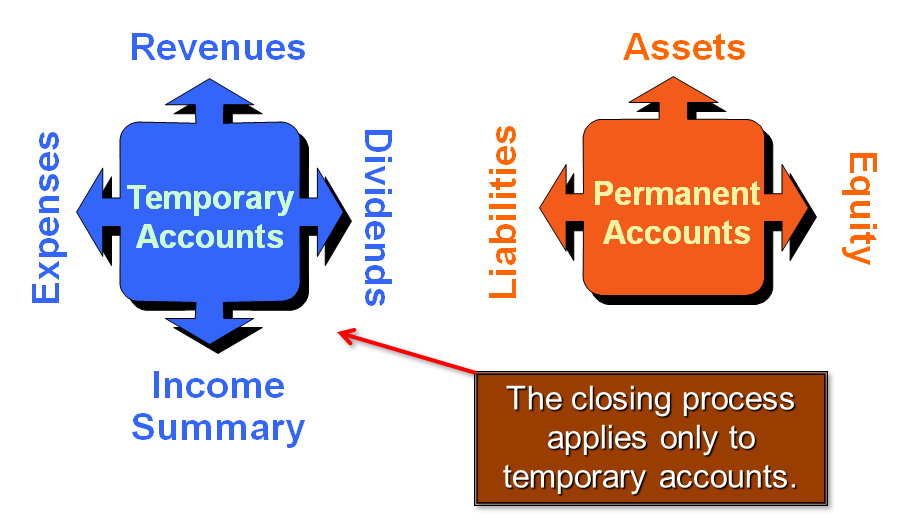
- 暫時性與永久性帳戶 (Temporary and Permanent Accounts)
- Temporary (or nominal) accounts accumulate data related to one accounting period. They include
all income statement accounts, the
dividends account, and the
Income Summary account.
暫時性帳戶(或虛帳戶)只累積一個會計期間,包括所有損益表科目、股利及損益彙總。 - Permanent (or real) accounts report on activities related to one or more future
accounting periods.
永久性帳戶(或實帳戶)會累積存在未來的會計期間。 - They carry their ending balances into the next period and generally consist of all statement of financial position accounts.
其餘額會結轉至下一個會計期間,包括所有財務狀況表科目。
- Temporary (or nominal) accounts accumulate data related to one accounting period. They include
all income statement accounts, the
dividends account, and the
Income Summary account.
- 結帳分錄 (Recording Closing Entries)
- 透過結帳分錄及過帳,將收入、費用、股利結清至保留盈餘。
- 收入、費用、股利期初時從零開始 。
- 保留盈餘必須反應前期的收入、費用、股利。
- Income Summary is a temporary account (only used for the closing process) that contains a credit for the sum of all revenues (and gains) and a debit for the sum of all expenses (and losses).
損益彙總包括收入總數寫在貸方,費用總數寫在借方。 - Its balance equals net profit or net loss and it is transferred to the
retained earnings.
產生的淨利或淨損結清至保留盈餘。 - Next the dividends account balance is transferred to the
retained earnings.
將股利結清至保留盈餘。
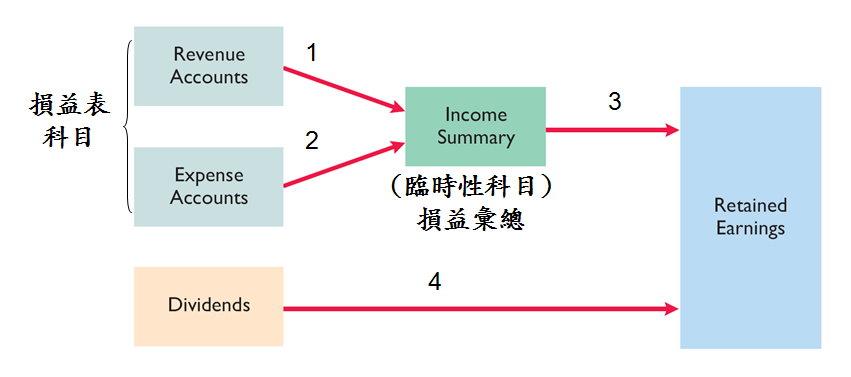
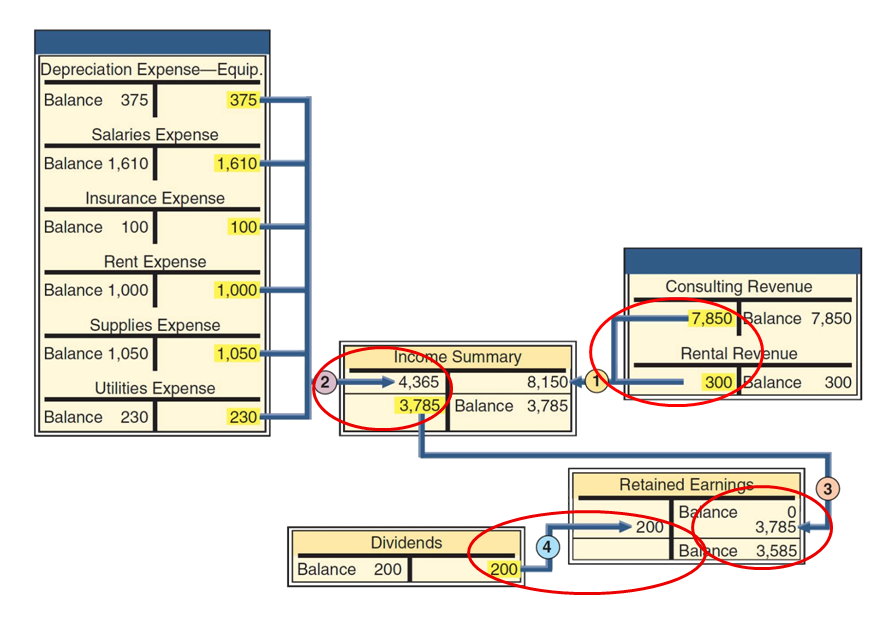
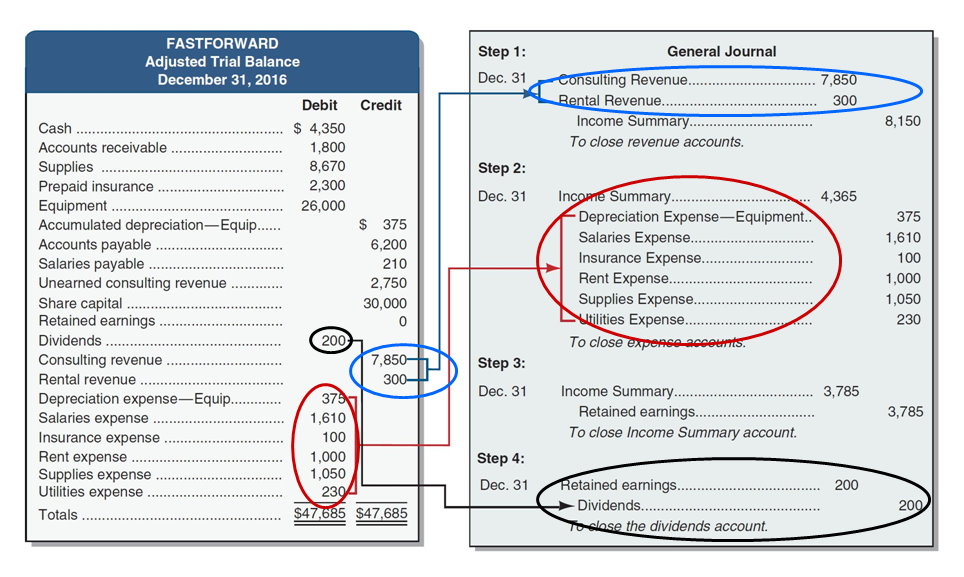
- Exhibit 4.3
Four-Step Closing Process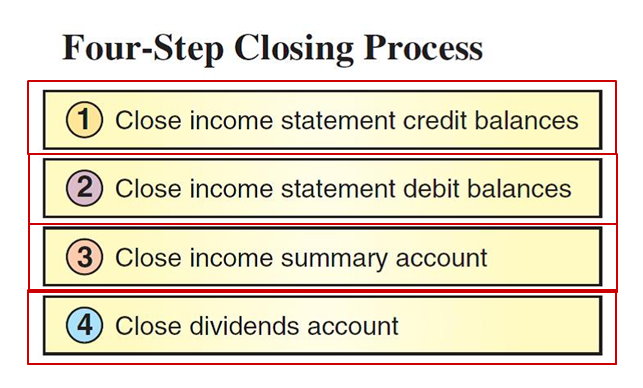
- A post-closing trial balance: a list of permanent accounts and their balances from the ledger after all
closing entries have been journalized and posted.
結帳後試算表:列示所有永久性帳戶及其結帳後餘額的報表。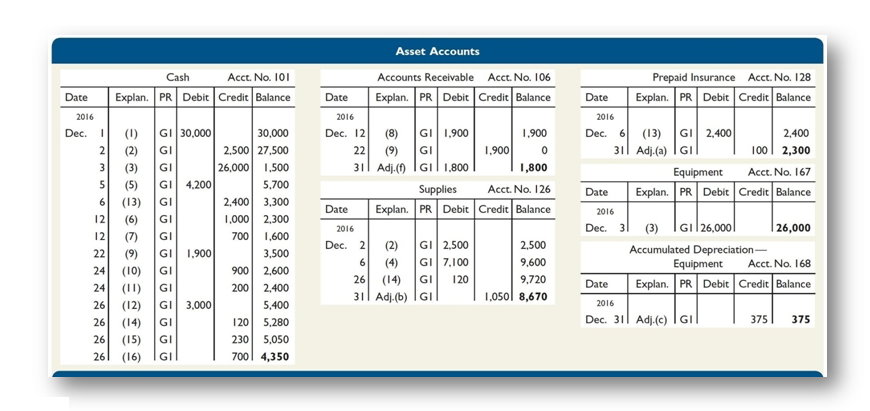
- The aim of a post-closing trial balance is to verify that
- total debits equal total credits for permanent accounts
永久性帳戶借貸是否平衡。 - all temporary accounts have zero balances
所有暫時性帳戶都為零。
- total debits equal total credits for permanent accounts
- Exhibit 4.6
Post-Closing Trial Balance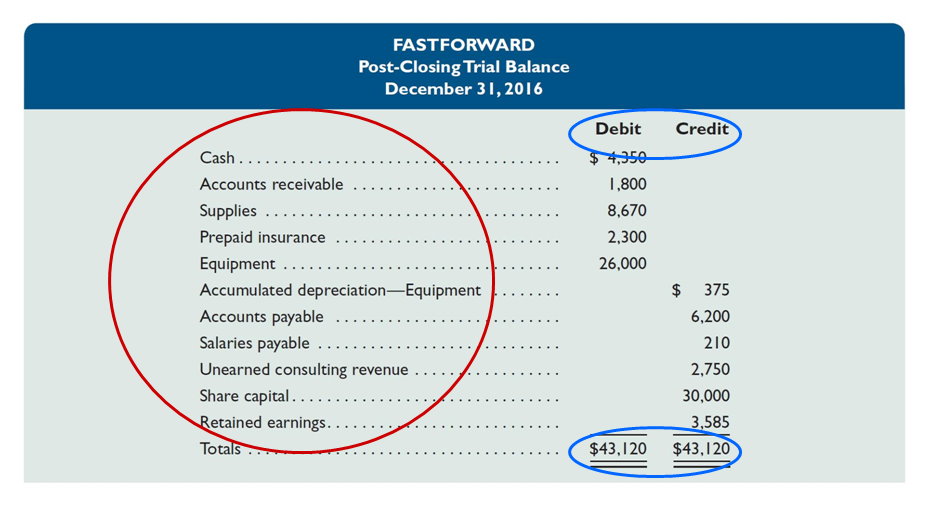
- Exhibit 4.7
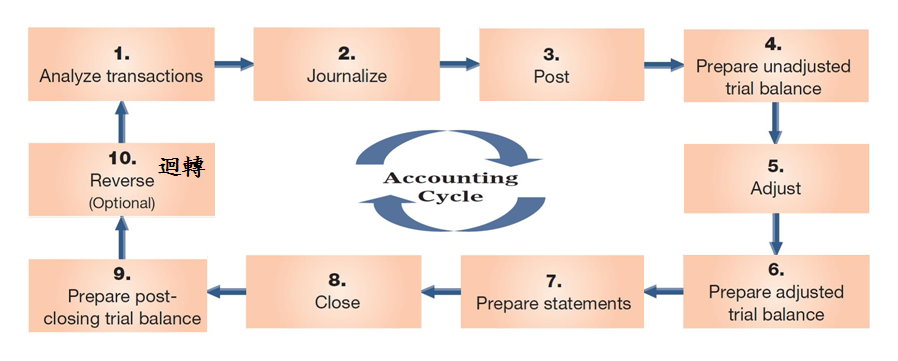
Steps in the Accounting Cycle
會計循環:產生報表所需的步驟。
- 透過結帳分錄及過帳,將收入、費用、股利結清至保留盈餘。
- 會計循環 (Accounting Cycle)
說明
1. 分析交易:分析交易以準備做分錄。 2. 做分錄:在日記簿裡記錄借貸科目。 3. 過帳:將日記簿裡借貸資料轉至總分類帳簿。 4. 編製調整前試算表:彙整調整前總分類帳簿的帳戶及其餘額。 5. 調整:做調整分錄並過帳。 6. 編製調整後試算表:彙整調整後總分類帳簿的帳戶及其餘額。 7. 編製財務報表:利用調整後試算表編製財報。 8. 結帳:結清所有暫時性帳戶並過帳。 9. 編製結帳後試算表:檢視結帳程序的正確性。 10. 迴轉 (可選擇) :選定某些調整分錄做回轉 (附錄4A)。 - 分類後財務狀況表 (Classified Statement of Financial Position)
- 分類後財務狀況表將資產及負債再加以組織分類,以提供更有用的資訊給決策者。
Categories of a classified statement of financial position Assets Liabilities and equity Current assets
Non-current assets
- Long-term financial assets
- Property, plant and equipment
- Intangible assets
Current liabilities
Non-current liabilities
EquityCurrent or short-term items are those expected to come due (both collected and owed) within the longer of one year or the company's normal operating cycle.流動(短期)資產:預期在一年或一個營業循環內(取長的)會變現、耗用掉的資源。
- Classification Structure
- Current items are those expected to come due (either collected or owed) within one year or the company's operating cycle, whichever is longer.
流動項目是預期在一年或一個營業循環內(取長的)會變現、耗用掉的項目。 - The operating cycle is the time span from when cash is used to acquire goods and services until cash is received from the sale of goods and services.
營業循環是指付現取得商品或服務,到提供商品或服務而收現所需要的時間。 - Service company: From paying employees who perform the service to
receiving cash from customers.
服務業的營業循環:支付薪水給員工,到員工提供服務給顧客而收現。
- Current items are those expected to come due (either collected or owed) within one year or the company's operating cycle, whichever is longer.
- Classification Categories
- Current assets (also called short-term assets) are cash and other resources that are expected to be sold, collected, or used
within one year or the company's operating cycle, whichever is longer.
流動資產(短期資產)是預期在一年或一個營業循環內(取長的)會出售、變現、耗用完的資源。 - Non-current assets (also called long-term assets) are assets
not used up within one year or the operating cycle, whichever is longer.
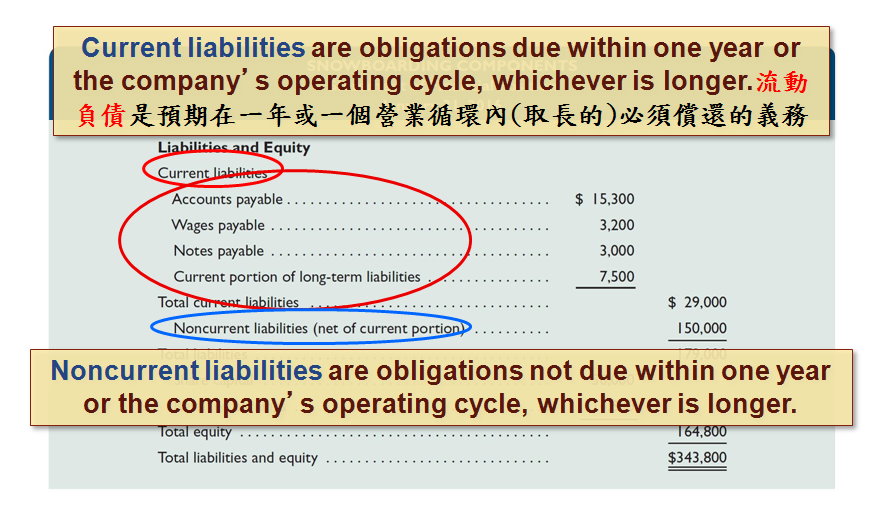
非流動資產(長期資產)是不預期在一年或一個營業循環內(取長的)會耗用完的資源。 - Current liabilities (also called short-term liabilities) are obligations due to be paid or settled
within one year or the operating cycle, whichever is longer.
流動負債(短期負債)是預期在一年或一個營業循環內(取長的)必須償還的義務。 - Non-current liabilities (also called long-term liabilities) (非流動負債;長期負債) are obligations not due within one year or the operating cycle, whichever is longer.
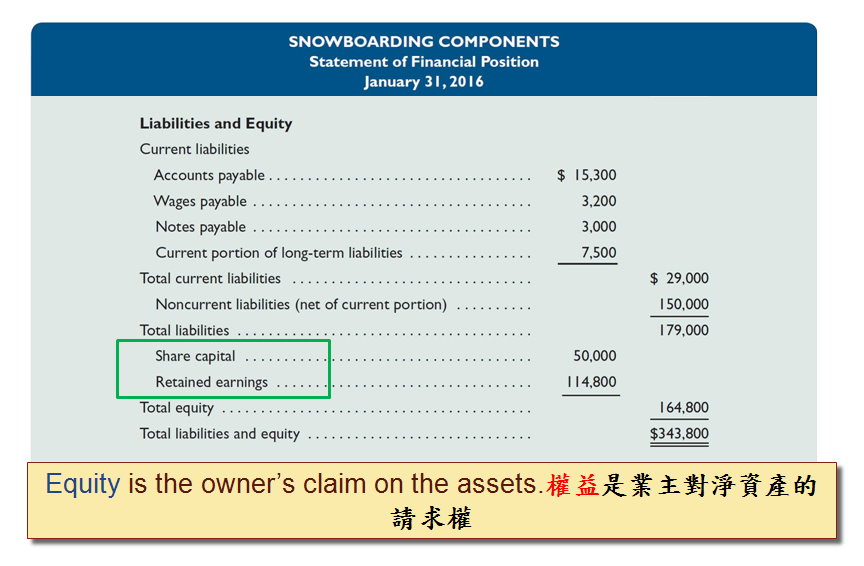
- Equity is the owner's claim on assets. Two main subsections,
share capital(股本) and
retained earnings(保留盈餘).
權益是業主對淨資產的請求權。
- Exhibit 4.9
Example of a classified statement of financial position
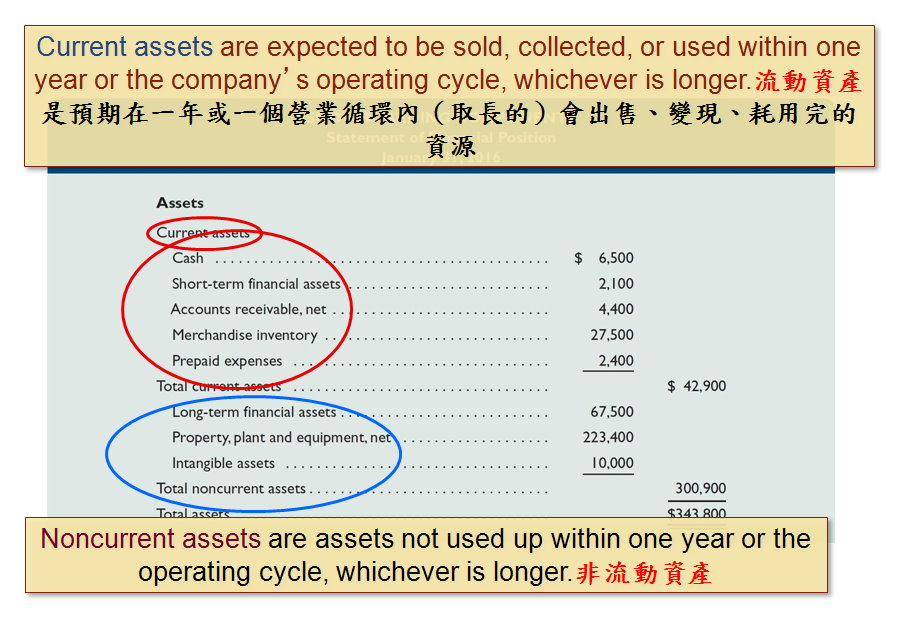
- Current assets (also called short-term assets) are cash and other resources that are expected to be sold, collected, or used
within one year or the company's operating cycle, whichever is longer.
- 分類後財務狀況表將資產及負債再加以組織分類,以提供更有用的資訊給決策者。
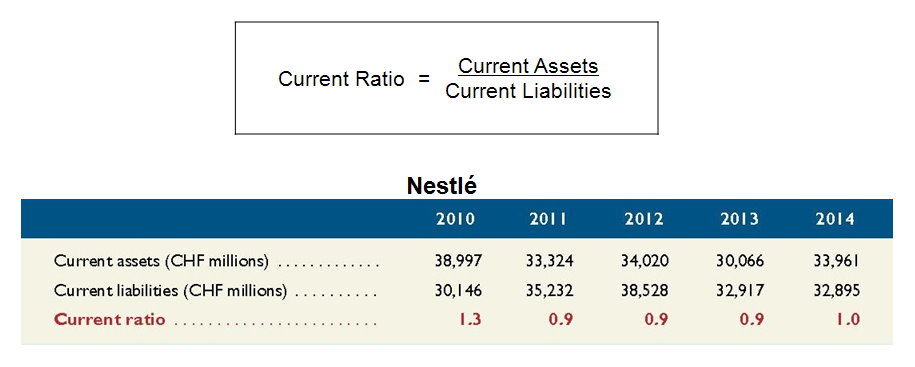
- 流動比率 (Current Ratio)
Helps assess the company's ability to pay its debts in the near future.
有助於評估企業短期償債的能力。
圖片/部分文字來源:McGraw-Hill Education.
附加檔案: ch04.ppt、2017-Ch4-ppt.ppt
ch04.ppt、2017-Ch4-ppt.ppt



© 2026 Red Whale
Top